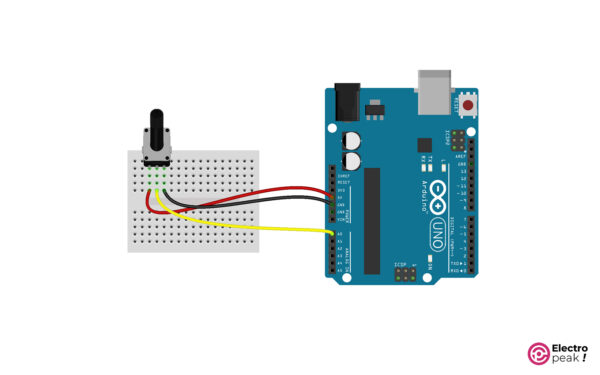
How to Use And How it Works w Example Circuit Diagram EEPROM memory is a type of external memory that the Arduino can write to. You can use it to store files and log sensor data. To demonstrate how to use EEPROM memory on the Arduino, we will build a project that reads the temperature from a thermistor, and writes the sensor data to an external EEPROM.
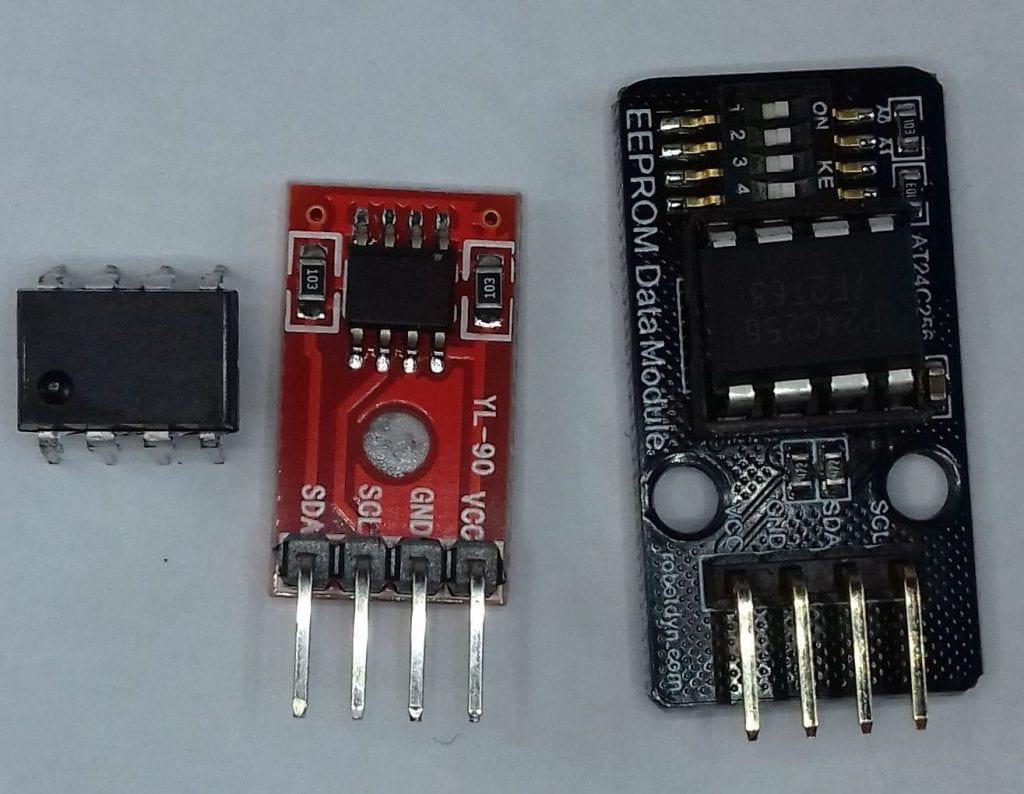
A lot of modern microcontrollers - such as the ATmega328 - contain some built-in EEPROM, but that doesn't mean that you can't add more! Serial EEPROM devices like the Microchip 24-series EEPROM allow you to add more memory to any device that can speak I²C. Today we're going to learn how to read and write serial EEPROM devices using Arduino.
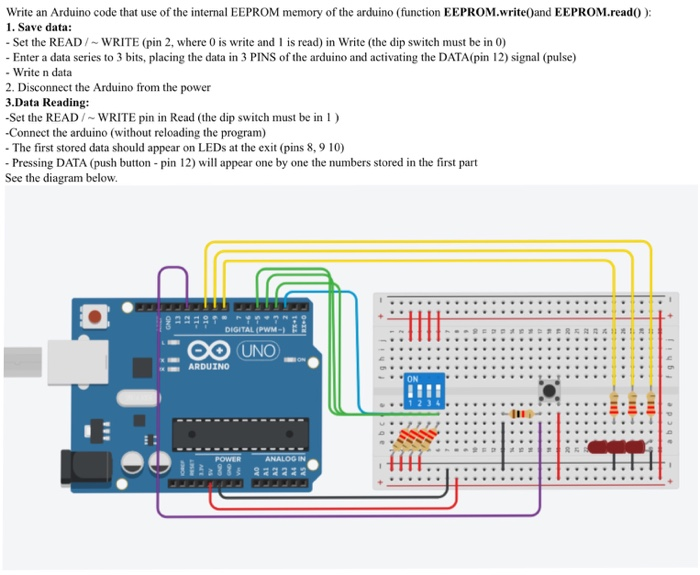
External EEPROM Read Write with Arduino Circuit Diagram
Reading and Writing Data to External EEPROM Using Arduino: EEPROM stands for Electrically Erasable Programmable Read-Only Memory. EEPROM is very important and useful because it is a non-volatile form of memory. This means that even when the board is powered off, the EEPROM chip still retains the program tha…

Using External EEPROM. If the limited amount of nonvolatile storage in the Arduino is insufficient for your application then you can add an external EEPROM. Using an I2C device simplifies both the wiring and code. AT24LC256 EEPROM. The AT24LC256 is a 256 Kilobit EEPROM. As there are eight bits in a byte this translates to 32 Kb of nonvolatile

Reading and Writing Serial EEPROMs Circuit Diagram
Video demonstrates how write and read from external EEPROM(24LC256) using Arduino with I2C communication protocol.For code to read and write to EEPROM see:ht